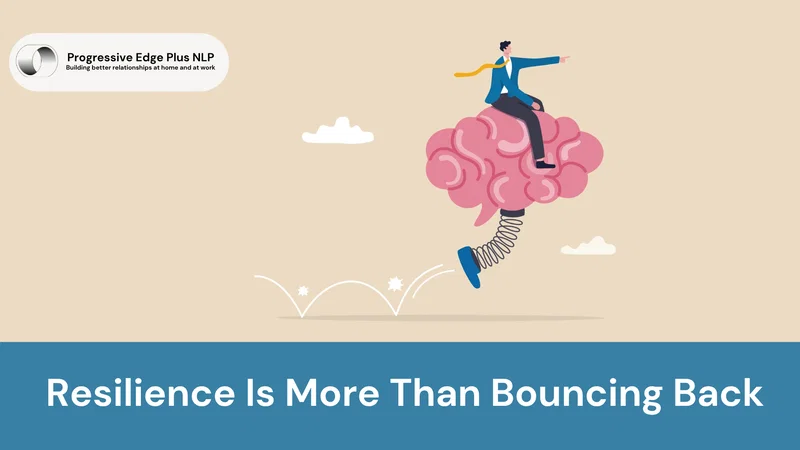
4 Types of Resilience We Can Strengthen
When you hear the word resilience, what comes to mind?
We often describe resilience as our ability to “bounce back” when life knocks us down.
But after more than 40 years of working with people through change, relationships, personal challenges and difficult life experiences, I see resilience a little differently.
Resilience isn’t about pretending everything is fine.
It isn’t about never becoming overwhelmed, frightened, hurt or discouraged.
And it certainly isn’t about being strong every minute of every day.
To me, resilience is our ability to move through life’s challenges while continuing to find our way forward.
Sometimes we bounce back.
Sometimes we adapt.
Sometimes we ask for help.
And sometimes we don’t return to the person we were before the experience at all.
We grow into someone new.
The wonderful thing about resilience is that it isn’t something you either have or don’t have. It includes skills and inner resources that we can continue to develop throughout our lives.
And resilience doesn’t come from just one place.
There are four different types of resilience that can support us when life becomes difficult.
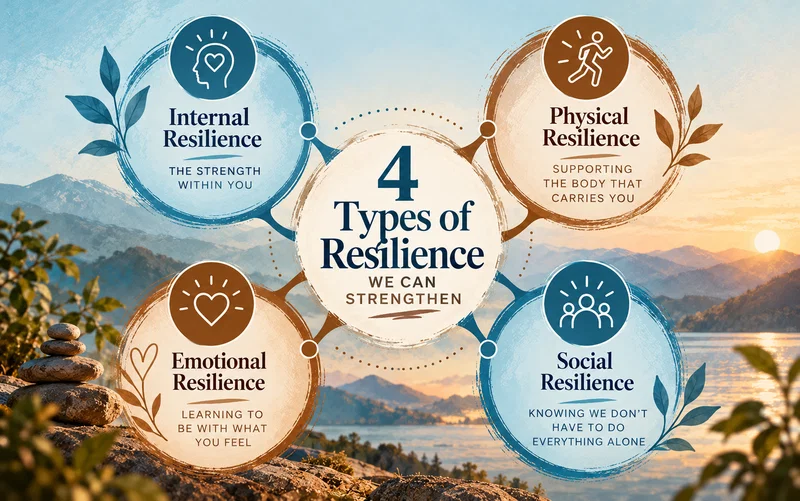
1. Internal Resilience: The Strength Within You
Internal resilience is your ability to stay connected to yourself when circumstances around you become difficult.
It is that inner voice that says:
“This is difficult, but I will find my way through it.”
Internal resilience doesn’t mean you always know what to do.
It means you trust yourself enough to take the next step.
It grows when you learn to understand yourself, recognize your strengths, challenge limiting beliefs and become more conscious of how you respond to life’s difficulties.
You strengthen your internal resilience every time you:
- trust yourself to make a decision
- adapt when something doesn’t go according to plan
- learn from a mistake rather than allowing it to define you
- recognize what you can and cannot control
- speak to yourself with compassion
- take responsibility for what you can change
- choose to try again
One of the questions I encourage people to ask is:
“What is within my control right now?”
You may not be able to control what happened. You may not be able to control another person’s behaviour.
But you can begin discovering where you still have choice. And choice helps us reconnect with our personal power.

2. Physical Resilience: Supporting the Body That Carries You Through Life
We sometimes forget that resilience isn’t only emotional or mental.
Your body is part of the equation too.
Think about how differently you respond to stress when you’re exhausted compared with when you’re rested and feeling well. Everything can feel harder when our physical resources are depleted.
Physical resilience is our body’s capacity to cope with physical demands, recover and continue functioning through life’s challenges.
We support physical resilience through things such as:
- adequate sleep
- nourishing food
- movement
- rest and recovery
- breathing
- spending time outside
- paying attention to what our body is telling us
This isn’t about having the “perfect” health routine. It is about developing a respectful relationship with your body.
Ask yourself:
“What does my body need from me today?”
Perhaps it needs movement. Perhaps it needs nourishing food. Perhaps it needs fresh air. Or perhaps it simply needs you to stop pushing for a little while and rest.
Listening to your body isn’t weakness.
It is self-awareness.

3. Emotional Resilience: Learning to Be With What You Feel
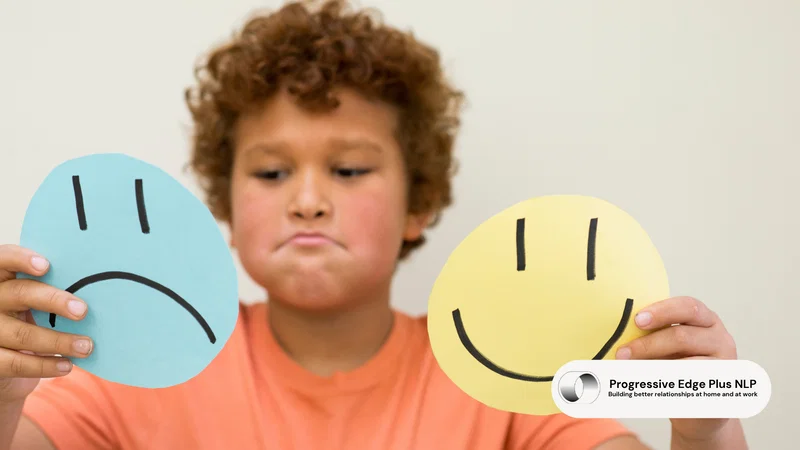
Emotional resilience is sometimes misunderstood as staying positive no matter what happens. I don’t believe that’s what emotional resilience is.
- You can be resilient and still feel sad.
- You can be resilient and frightened.
- You can be resilient and angry.
- You can be resilient and have a day when everything feels like too much.
Emotional resilience isn’t about avoiding difficult emotions.
It is learning how to experience emotions without allowing them to completely take over our choices.
Instead of immediately reacting, we can learn to pause and ask:
- “What am I feeling?”
- “What might this emotion be telling me?”
- “What do I need?”
- “What is my next loving step?”
This is where emotional awareness becomes so powerful.
Our feelings often carry information.
😨 Fear may be asking us to pay attention.
😠 Anger may be showing us that a boundary has been crossed.
💧 Sadness may be asking us to slow down and process a loss.
🌪️ Overwhelm may be telling us that something needs to change.\
When we stop fighting our emotions and begin listening to them, they can become guides rather than enemies.
4. Social Resilience: Knowing We Don’t Have to Do Everything Alone
There is another form of resilience that I believe is incredibly important:
connection.
Human beings need other human beings.
Social resilience is our ability to create and maintain relationships and communities that support us through life’s challenges.
- It might be your partner.
- A friend.
- Family.
- A counsellor.
- A mentor.
- A spiritual community.
- A professional network.
- Or simply someone who can sit beside you and listen without trying to fix everything.
Sometimes resilience sounds like: “I can handle this.”
But sometimes resilience sounds like: “I can’t do this alone. I need some support.”
Both are strength.
Healthy relationships give us places where we can be heard, encouraged, challenged, comforted and reminded of who we are when we temporarily forget.
Ask yourself:
“Who are the people in my life with whom I can truly be myself?”
And perhaps equally important:
“Whose life am I helping to make more resilient through my presence?”
Resilience grows through connection in both directions.

Which Area of Resilience Needs Your Attention?
Take a moment and check in with yourself.
Think about these four areas:
Internal How much do I trust myself to navigate challenges?
Physical Am I giving my body what it needs to support me?
Emotional Can I acknowledge my emotions without judging myself for having them?
Social Do I have people I can genuinely turn to for support?
You may discover that you’re very strong in one area and depleted in another.
That’s okay.
This isn’t a test. It’s information.
Awareness allows us to recognize where a little more care, attention or support might make a meaningful difference.
Resilience Is Built in the Small Moments
We often imagine resilience showing up during life’s biggest crises.
But resilience is also being developed in ordinary moments.
- Every time you set a healthy boundary.
- Every time you choose to rest.
- Every time you ask for help.
- Every time you challenge a limiting belief.
- Every time you calm yourself before reacting.
- Every time you learn something about yourself.
- Every time you choose to try again.
You are strengthening your resilience.
You don’t have to become someone who is never affected by life.
That isn’t the goal.
The goal is to become someone who knows that when life changes, disappoints you or challenges you, you have inner resources, physical resources, emotional tools and supportive relationships to help you find your way forward.
And when one of those resources isn’t strong enough yet? You can strengthen it.
Because resilience isn’t simply something you’re born with.
It is something you can continue to learn, practise and grow throughout your life.
Perhaps the question isn’t:
“Am I resilient?”
Perhaps a more helpful question is:
“What would help me become a little more resilient today?”