How to Find Your Way Back to Understanding, Connection and Each Other
Do you remember when talking to your partner felt easy?
You couldn’t wait to tell them about something that happened during your day. You shared your thoughts, your dreams, your frustrations and sometimes absolutely nothing important at all.
Then, somewhere along the way, communication changed. It usually doesn’t happen because of one enormous argument.
More often, it happens slowly.
A conversation gets avoided because you’re both tired. Something hurts, but you don’t say anything. One person feels criticized and becomes defensive. The other feels unheard and stops trying.
Little by little, the conversations become more about who’s picking up the groceries, what time someone needs to be somewhere, what needs to be paid and what needs to get done.
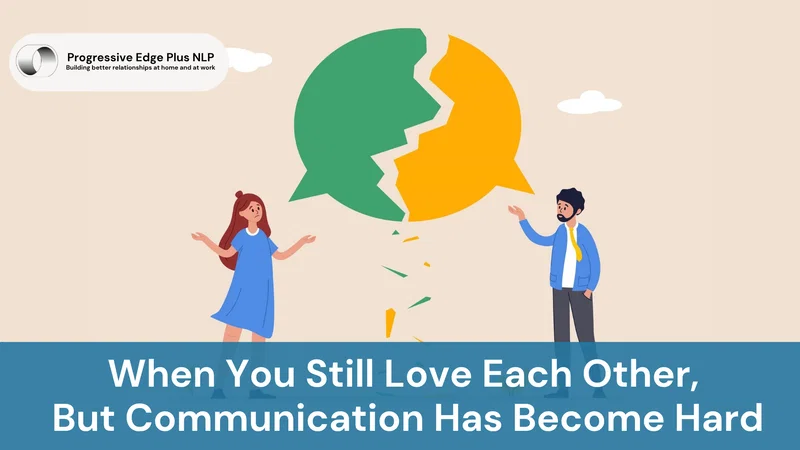
You may still love each other very much. But you don’t feel as connected.
And this is something I want couples to understand:
Communication difficulties don’t necessarily mean there is something wrong with your relationship or that the love has disappeared.
Often, you’ve simply developed communication patterns that are no longer helping you understand each other.
And patterns can change.

Communication Starts With Understanding Yourself
We often think better communication begins with learning what to say to our partner.
I believe it begins one step earlier. It begins with understanding ourselves.
Every one of us comes into a relationship with our own history, personality, beliefs, sensitivities, fears and ways of interpreting the world.
That’s one of the reasons I created the PEP Personality Process. After working with people and relationships for more than 40 years, I’ve seen again and again that two people can experience exactly the same situation very differently.
One person may need to talk immediately. The other may need time to process.
One may interpret silence as rejection. The other may use silence to prevent themselves from saying something they’ll regret.
Neither person necessarily has bad intentions. They’re simply processing the experience differently.
Understanding this can completely change the way we see our partner.

That shift from judgment to curiosity can be incredibly powerful.
Know What Triggers You
We all have emotional triggers.
- Maybe it’s a particular tone of voice.
- Being interrupted.
- Feeling ignored.
- Someone walking away.
- Feeling criticized.
- Feeling controlled.
- Feeling as though you’re not important.
Sometimes our reaction is about what’s happening now. Sometimes what’s happening now touches something much older.
Your body will often tell you before your mind does.
- Your heart starts racing.
- Your jaw tightens.
- Your breathing changes.
- You suddenly want to attack, defend yourself, shut down or leave.
Those signals are valuable.
Instead of immediately reacting, learn to recognize them.
Ask yourself: “What am I actually feeling right now?”
Then go a little deeper:
“What is underneath that feeling?”
Perhaps underneath the anger is hurt.
Underneath the defensiveness is fear of not being good enough.
Underneath the frustration is a need to feel respected.
Underneath the withdrawal is a fear of making things worse.
Your triggers aren’t something to be ashamed of. They can become wonderful teachers when we are willing to understand them.
Sometimes the Most Loving Thing You Can Do Is Pause
When emotions become intense, continuing a conversation isn’t always productive.
But there is an important difference between taking space and abandoning the conversation.
Walking away without explanation can leave your partner feeling rejected or frightened that the issue will never be addressed.
Instead, you might say:
“I’m becoming overwhelmed, and I don’t want to say something I’ll regret. I care about you, and this conversation matters to me. Can we take 20 minutes and come back to it?”
Now the pause isn’t rejection. It’s an act of care.
You’re saying:
“I still want to work this out with you. I simply want to be in a better emotional place when we do.”
Use that time to actually calm yourself.
Breathe. Walk. Reconnect with your body.
Ask yourself what you’re really trying to communicate.
And most importantly, come back when you said you would.
That builds trust.

Replace Accusation With Expression
There is a huge difference between saying:
“You never listen to me.”
and saying:
“When I’m talking and I don’t feel I have your attention, I feel unimportant and disconnected from you.”
The first statement invites defence. The second invites understanding.
Try communicating four things:
What happened?
- What did I feel?
- What do I need?
- What would help?
For example:
“When we’re having dinner and you’re looking at your phone while I’m talking, I feel disconnected. Spending time together and feeling heard are important to me. Could we put our phones away while we’re eating?”
You’re still addressing the problem. You’re simply doing it without attacking the person you love.
This is what I mean by Conscious Communication.
It isn’t about avoiding difficult conversations.
It’s about learning how to have them in a way that protects the relationship while still honouring your truth.

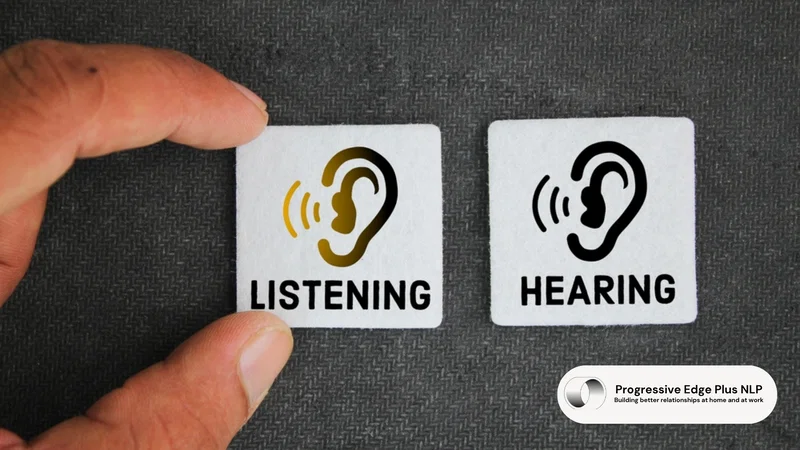
Listen to Understand, Not to Answer
This sounds simple. It isn’t.
Think about your last disagreement.
While your partner was talking, were you really listening?
Or were you preparing your response?
Defending yourself in your mind?
Looking for the part of their argument that was wrong?
Thinking about how you were going to prove your point?
Most of us have done this. But one of the greatest gifts we can give another person is the experience of truly being heard.
You don’t have to agree with everything your partner says to understand their experience.
Try saying: “Tell me more about that.”
Or:
“Let me see if I understand what you’re saying.”
And then reflect back what you heard. You might be amazed by what happens when someone realizes they don’t have to fight to be understood.
Defensiveness begins to soften. And when defensiveness softens, connection has room to return.
Not Every Conversation Needs to Fix Something
I love this idea because so many couples unknowingly turn their relationship into a business meeting.
- Who’s doing what?
- What needs fixing?
- What’s happening with the children?
- What are we spending?
- What’s wrong?
- What decision needs to be made?
Those conversations are necessary. But where are the conversations that simply allow you to know each other?
Try creating 20 minutes once a week where nothing needs to be fixed.
Put away your phones. No household logistics. No complaints. No problem-solving.
Just talk.
Ask each other:
What have you been thinking about lately?
- What’s something you’re excited about?
- What’s been difficult for you that I might not realize?
- What’s something you appreciate about your life right now?
- What’s something you’re dreaming about?
You might even ask:
“Is there anything you’ve been wanting me to understand?”
And then listen. Connection doesn’t always require a grand romantic gesture.
Sometimes it needs twenty quiet minutes and two people who are genuinely present with each other.

Small Changes Can Create Big Shifts
Communication patterns usually don’t develop overnight, and they don’t disappear overnight either.
Give yourselves some grace.
You will have moments when you fall back into old habits. You may become defensive.
You may say something you wish you hadn’t. You may forget everything you’ve learned in the middle of an argument!
That’s being human.
What matters is what you do next.
- Can you recognize what happened?
- Can you take responsibility for your part?
- Can you repair?
- Can you choose differently next time?
Healthy relationships aren’t relationships without disagreements. They are relationships where two people continue learning how to move through those disagreements while maintaining respect, compassion and connection.
Sometimes the most powerful thing you can say is:
“We didn’t handle that very well. Can we try again?”
There is so much hope in those words

Finding Your Way Back to Each Other
If communication between you has become difficult, please don’t immediately assume that you’ve lost what you once had.
Sometimes love is still very much there.
It has simply become buried beneath hurt, misunderstanding, stress, old patterns and conversations that haven’t happened.
Start small.
Become curious about yourself. Become curious about your partner.
Pause before reacting. Speak from your experience instead of attacking.
Listen to understand.
Make time to connect when there isn’t a problem to solve. And remember that the person sitting across from you isn’t supposed to experience the world exactly as you do.
Part of loving another human being is learning their world while also helping them understand yours.
The goal isn’t perfect communication. The goal is creating a relationship where both people can increasingly feel safe enough to be real, compassionate enough to listen, and committed enough to keep finding their way back to each other.
Sometimes the love isn’t gone at all.
You simply need a new way to reach each other.