7 Ways It Can Change How You Experience Life
Life doesn’t always go according to plan.
Relationships change. Work changes. People disappoint us. We experience loss, uncertainty, health challenges, financial pressures and situations we never expected to face.
We can’t control all of those things.
But we can develop our ability to respond to them.
That’s where resilience becomes so important.
I don’t see resilience as simply being “tough” or pushing through difficult circumstances.
And it certainly doesn’t mean that difficult things don’t affect you.
Resilience is our ability to adapt, recover, learn and continue moving forward when life challenges us.
Sometimes resilience means taking action.
Sometimes it means changing direction.
Sometimes it means asking for help.
And sometimes it means recognizing that what you’ve been doing is no longer working and having the courage to make a different choice.
The wonderful thing is that resilience can be strengthened.
And the more we develop it, the more it can influence almost every area of our lives.
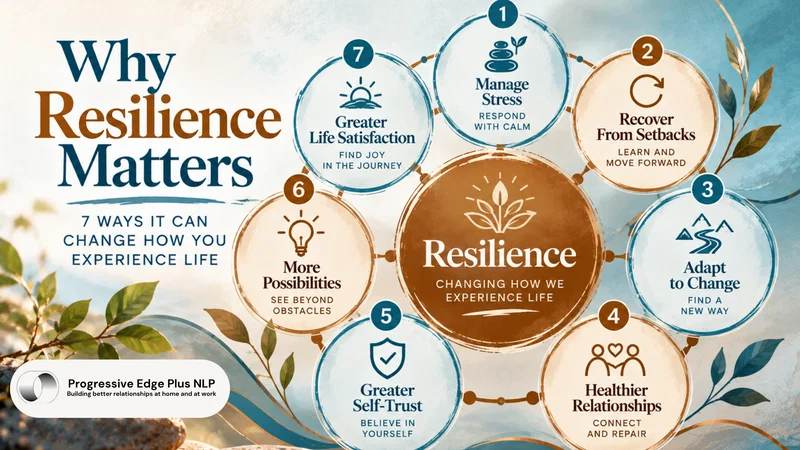
1. You Become Better at Managing Stress
Resilient people still experience stress.
The difference is that they develop more tools for working with it.
Instead of immediately becoming overwhelmed by everything that’s happening, you begin learning how to pause and ask:
“What is actually happening right now?”
“What part of this can I influence?”
“What do I need?”
“What is my next step?”
That pause can make an enormous difference.
It allows you to move from automatic reaction toward conscious response.
You may not be able to remove the stressful situation, but you can learn to regulate yourself while moving through it.
And that supports both emotional and physical wellbeing.

2. You Recover More Easily From Setbacks
- Something didn’t work.
- You made a mistake.
- Someone said no.
- A relationship changed.
- An opportunity disappeared.
- Your original plan fell apart.
Without resilience, a setback can quickly become a story about ourselves:
“I failed.”
“I’m not good enough.”
“Nothing ever works for me.”
Resilience helps us separate what happened from who we are.
Instead of saying:
“I am a failure,”
we can begin asking:
“What can I learn from this?”
“What would I do differently?”
“What possibility might I not be seeing yet?”
A setback then becomes information rather than an identity. That is a very powerful shift.
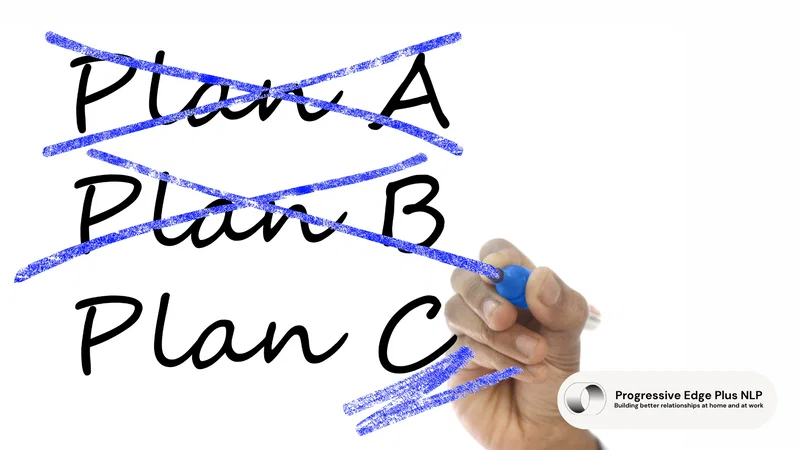
3. You Become More Flexible When Life Changes
Change is inevitable.
Yet many of us spend enormous amounts of energy wishing something hadn’t changed or trying to make life return to the way it was.
Resilience gives us greater flexibility.
It helps us move from:
“This wasn’t supposed to happen.”
toward:
“This has happened. Now, how do I want to move forward?”
That doesn’t mean we don’t grieve what we’ve lost.
Acceptance isn’t the same as approval.
It simply means we stop using all of our energy fighting reality and begin directing some of that energy toward what we can create next.
One of the beliefs I often come back to is:
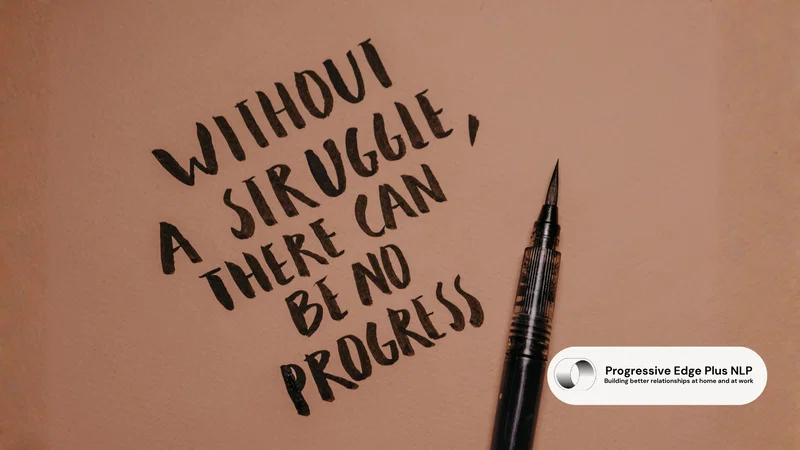
Change is inevitable. Progress is my choice.
4. Your Relationships Can Become Healthier
We don’t always think of resilience as a relationship skill, but it absolutely can be.
- Relationships require flexibility.
- There will be misunderstandings.
- Disappointments.
- Different opinions.
- Different personalities.
- Stressful seasons.
And times when one or both people aren’t at their best.
Emotional resilience helps us pause before reacting.
It helps us tolerate discomfort long enough to listen.
It allows us to say:
“I was wrong.”
“I need some time.”
“Can we try that conversation again?”
“Help me understand what you’re experiencing.”
Instead of viewing every disagreement as a threat to the relationship, resilient couples can learn to see challenges as something they can work through together.
Sometimes the most important relationship skill isn’t avoiding conflict.
It’s knowing how to repair after it.

5. You Develop Greater Confidence and Self-Trust
Every time you move through something difficult, you learn something about yourself.
You discover: “I can handle more than I thought.”
Not because everything worked out perfectly. But because you found a way through.
That experience builds self-trust.
And self-trust doesn’t mean believing you’ll always know the right answer.
It means believing:
“Whatever happens, I trust myself to work with it.”
That is a very different kind of confidence.
It isn’t dependent on life being predictable. It comes from knowing that you have internal resources, skills and people you can turn to when you need them.

6. You Become More Open to Possibilities
When we’re frightened or overwhelmed, our thinking can become very narrow.
- We see the problem.
- The obstacle.
- What went wrong.
- What we might lose.
Resilience helps us gradually widen that perspective.
Instead of only asking: “What’s wrong?”
we can also ask: “What else might be possible?”
This is where creativity enters.
Perhaps there is another solution.
Another approach. Another conversation. Another opportunity. Another direction you hadn’t considered.
Resilience doesn’t require unrealistic positivity.
It simply allows us to remember that our current circumstances are not necessarily the end of the story.

7. You Can Experience Greater Satisfaction With Your Life
Perhaps one of the greatest benefits of resilience is that we become less dependent on everything going perfectly in order to be okay.
Think about that.
If happiness requires everyone around us to behave exactly as we want, our plans to unfold perfectly and life to remain predictable, happiness becomes very fragile.
Resilience helps us develop something deeper.
We learn that we can experience disappointment and still find joy.
We can experience uncertainty and still find peace.
We can go through a difficult season and still notice what is good.
We can lose one possibility and remain open to another.
Life doesn’t have to be perfect for it to contain beautiful moments.

Resilience Isn’t About Doing Everything Alone
I think this is important.
Sometimes people believe that being resilient means:
“I should be able to handle this myself.”
I disagree.
One of the healthiest forms of resilience is knowing when you need support.
- Reaching out to a friend.
- Talking with your partner.
- Asking a professional for help.
- Joining a supportive community.
- Allowing someone to listen.
Asking for help isn’t the opposite of resilience. It can be part of resilience.
We are not meant to navigate every difficult experience alone.

How Can You Strengthen Your Resilience?
Start small. You don’t need to completely transform yourself.
The next time something doesn’t go according to plan, pause before automatically reacting.
Ask yourself:
- What am I feeling?
- What do I need?
- What is within my control?
- What can I learn from this?
- Who could support me?
And finally: What is my next loving step?
You don’t need to solve everything today.
Sometimes resilience is simply choosing the next helpful step and trusting that another step will become visible from there.
You Have Already Been Practising Resilience
Take a moment and think about what you’ve already lived through.
There have probably been situations you once wondered whether you could handle. And yet, here you are.
Perhaps changed. Perhaps wiser. Perhaps still healing.
But here.
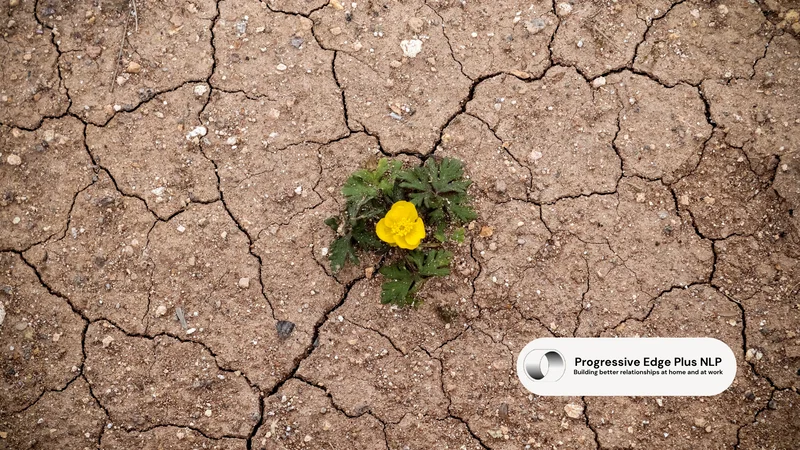
Don’t overlook the strength, wisdom and resources you’ve developed along the way.
And remember, resilience isn’t about becoming someone whom life can no longer hurt.
It is about becoming someone who knows how to care for themselves, learn, adapt, reach for support and continue moving forward when life does hurt.
That is a very different kind of strength.
And it is a strength we can continue building throughout our lives.